

KEY TAKEAWAY
India Afghanistan trade relations are moving toward a more practical phase of economic engagement, with the two sides agreeing to pursue follow-up measures covering customs cooperation, trade connectivity, pharmaceuticals, agriculture, investment and business-to-business engagement.
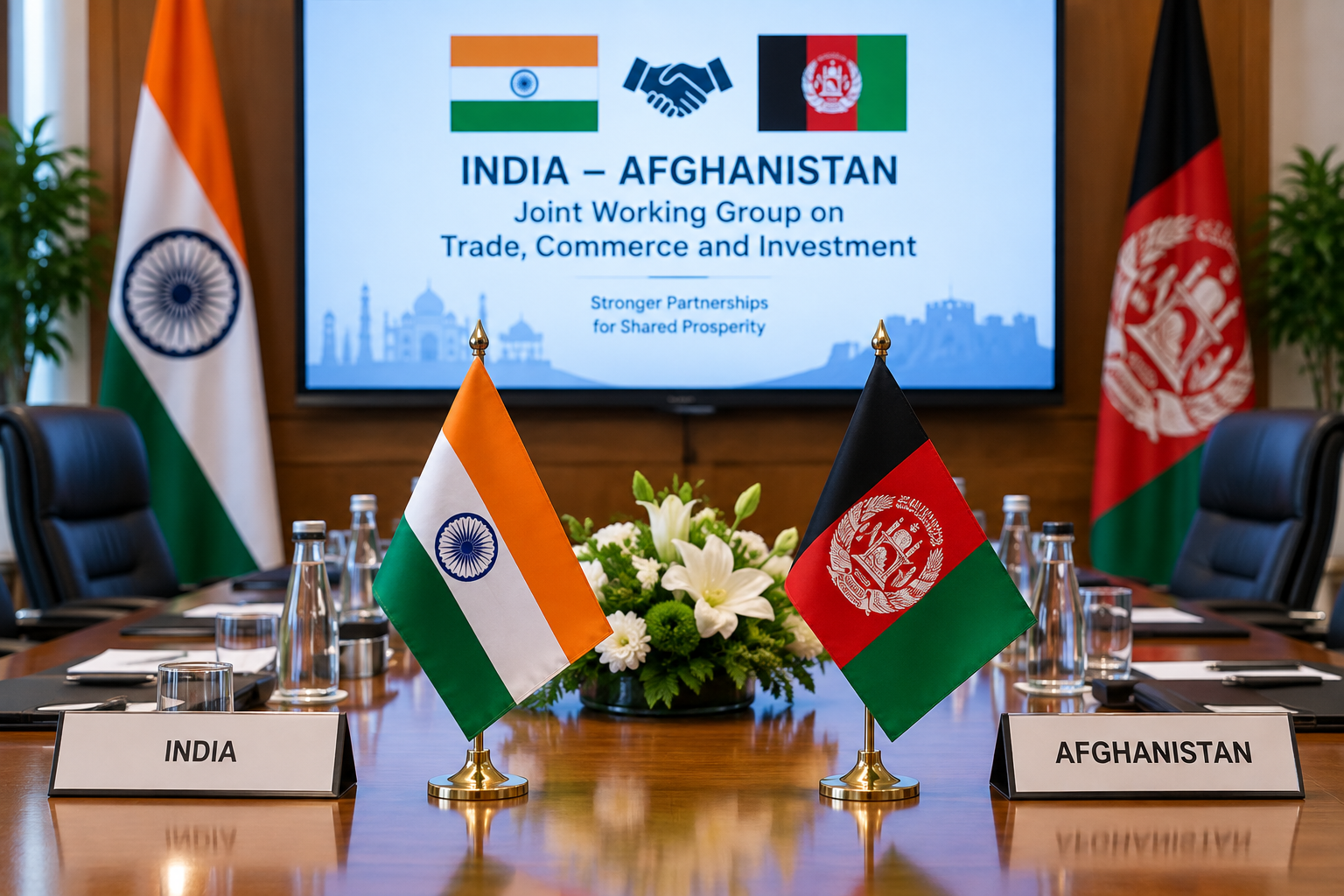
The discussions took place at the India–Afghanistan Joint Working Group on Trade, Commerce and Investment, which met virtually on 1 September 2026.
The outcome is not a new free trade agreement or an immediate broad tariff concession. Instead, the focus is on improving the practical conditions that can enable businesses to trade, invest and build commercial partnerships.
India–Afghanistan Trade Moves Back to Practical Trade Facilitation
The India–Afghanistan Joint Working Group on Trade, Commerce and Investment met virtually on 1 September, bringing together officials from commerce, industry, customs, regulatory authorities and diplomatic missions of both countries.
The discussions covered a broad range of issues affecting bilateral commerce, including trade facilitation, customs cooperation, visa facilitation for Afghan traders, banking and financial cooperation, pharmaceutical and agricultural trade, energy cooperation, investment and trade promotion.
The two sides agreed to pursue follow-up measures aimed at strengthening institutional cooperation and improving the environment for commercial activity.
For exporters and businesses, the significance lies less in a single policy announcement and more in whether these follow-up measures translate into smoother procedures and stronger commercial connectivity.
Customs and Data Sharing Could Improve Trade Efficiency
Customs cooperation was one of the central areas discussed by the two countries.
The proposed follow-up includes enhanced cooperation and data sharing between relevant authorities.
Better coordination can help reduce procedural friction in cross-border trade, particularly where exporters and importers have to deal with documentation, customs procedures and regulatory requirements.
For businesses, the practical question will be whether institutional cooperation eventually results in more predictable and efficient movement of goods.
Connectivity Remains Central to the Commercial Relationship
Trade connectivity was another important focus of the discussions.
India and Afghanistan agreed to pursue measures aimed at improving trade connectivity, including cargo-related and port-related issues.
For companies dealing with Afghanistan, logistics can be as important as tariffs. The ability to move goods reliably, manage documentation and maintain predictable delivery schedules directly affects the commercial viability of export transactions.
Improved connectivity could therefore support not only existing trade but also businesses considering Afghanistan as a potential market or sourcing destination.
Pharmaceuticals and Agriculture Are Priority Sectors
Pharmaceutical and agricultural trade were specifically identified for greater regulatory cooperation.
For pharmaceutical exporters, regulatory requirements and product approvals can determine whether market access translates into actual sales.
Agricultural trade faces its own requirements involving standards, documentation, quality and movement of products.
Closer cooperation between the relevant authorities could help address some of these practical barriers.
The opportunity, however, will depend on implementation and compliance with the applicable requirements in both markets.
Banking and Financial Cooperation Could Support Trade
The Joint Working Group also discussed banking and financial cooperation.
Access to appropriate financial channels is an important component of international trade because exporters and importers need mechanisms for payments, settlement, working capital and transaction management.
Greater cooperation in this area could help businesses manage cross-border transactions more effectively.
For smaller companies in particular, the availability and predictability of trade-related financial arrangements can influence whether a potential commercial opportunity is actually pursued.
Visa Facilitation Could Strengthen Business-to-Business Engagement
Visa facilitation for Afghan traders was also part of the discussions.
Business travel remains important for developing supplier relationships, meeting customers, negotiating contracts and establishing partnerships.
Improved business mobility could therefore complement wider trade facilitation measures.
This is particularly relevant as India and Afghanistan look beyond individual shipments toward longer-term commercial relationships.
Investment and Business Partnerships Are Part of the Next Phase
The discussions also covered investment and trade promotion, along with business-to-business engagement.
This creates scope for the relationship to move beyond conventional merchandise trade.
Companies could potentially explore opportunities involving:
- Import and export partnerships
- Distribution arrangements
- Agricultural trade
- Pharmaceutical business
- Investment partnerships
- Logistics and trade services
- Joint commercial ventures
The actual opportunities will depend on sector-specific regulations, commercial conditions and the implementation of agreed follow-up measures.
The Opportunity Goes Beyond Merchandise Exports
A stronger commercial relationship can create opportunities across multiple parts of the trade ecosystem.
Exporters need market access, but they also need logistics providers, financial institutions, customs support, regulatory expertise and reliable local business partners.
This means developments in customs cooperation and connectivity can have a wider effect than simply reducing the time required for a shipment to cross a border.
For Indian businesses, Afghanistan can therefore be viewed not only as an export destination but also as a market where partnerships and investment opportunities may develop.
What Indian Exporters Should Watch
Businesses interested in the Afghanistan market should watch the implementation of the measures discussed by the Joint Working Group rather than treating the meeting itself as an immediate change in market access.
Particular areas to monitor include:
- Customs cooperation and data sharing
- Cargo and trade connectivity
- Pharmaceutical regulatory cooperation
- Agricultural trade procedures
- Banking and financial channels
- Business visa facilitation
- Investment promotion
- Business-to-business engagement
These areas could determine how quickly the current government-level dialogue translates into commercial opportunities.
India–Afghanistan Trade Needs Implementation to Deliver Results
The latest discussions indicate continued institutional engagement between India and Afghanistan on trade and investment.
But the commercial impact will ultimately depend on implementation.
A customs cooperation mechanism has to improve actual procedures. Connectivity measures have to support real cargo movement. Regulatory cooperation has to make compliance more predictable. And business engagement has to produce transactions, partnerships and investment.
That makes the follow-up phase particularly important for companies watching the Afghanistan market.
What This Means for Companies Exploring Afghanistan
For Indian companies considering Afghanistan, the latest development is a signal to watch the market more closely rather than assume that a major new trade agreement has been announced.
Companies can begin by assessing:
- Products with potential demand in Afghanistan
- Applicable import and regulatory requirements
- Available logistics routes
- Payment and banking arrangements
- Potential local distributors or partners
- Sector-specific regulatory requirements
- Opportunities for investment or commercial partnerships
The government’s continuing engagement could make the operating environment more structured over time, but businesses should make decisions based on verified commercial and regulatory conditions.
From Government Dialogue to Actual Trade
The India–Afghanistan Joint Working Group provides an institutional channel for addressing practical trade barriers.
The next stage is execution.
If the agreed follow-up measures improve customs processes, connectivity, regulatory cooperation and business engagement, they could strengthen the foundations for greater bilateral trade and investment.
For exporters, the key opportunity is therefore not simply the announcement of another round of talks, but the possibility that trade facilitation becomes easier to use in practice.
What to Watch Next
The next developments to watch are concrete follow-up actions by the relevant authorities, particularly on customs cooperation, connectivity, regulatory coordination and business engagement.
For companies already trading with Afghanistan or considering the market, these developments could provide useful signals about the direction of bilateral commercial relations.
SOURCE
Ministry of Commerce & Industry / Press Information Bureau, Government of India
Official PIB source — India–Afghanistan Joint Working Group on Trade, Commerce and Investment
Source date: 2 September 2026
Meeting date: 1 September 2026


