

The India–New Zealand Free Trade Agreement enters into force on 20 October 2026, opening a new phase in bilateral trade relations. The agreement provides duty-free access for Indian exports to New Zealand and supports an ambitious target of doubling bilateral trade in goods and services to NZ$7 billion, approximately ₹35,000 crore, by 2030.
NEW DELHI: India’s Free Trade Agreement (FTA) with New Zealand is scheduled to enter into force on Tuesday, 20 October 2026, marking an important development for exporters, manufacturers, service providers and businesses exploring the New Zealand market.
According to the Government of India’s Press Information Bureau, the agreement provides duty-free access for 100% of Indian exports to New Zealand. It also covers investment, services, agricultural productivity, professional mobility and broader economic cooperation between the two countries.
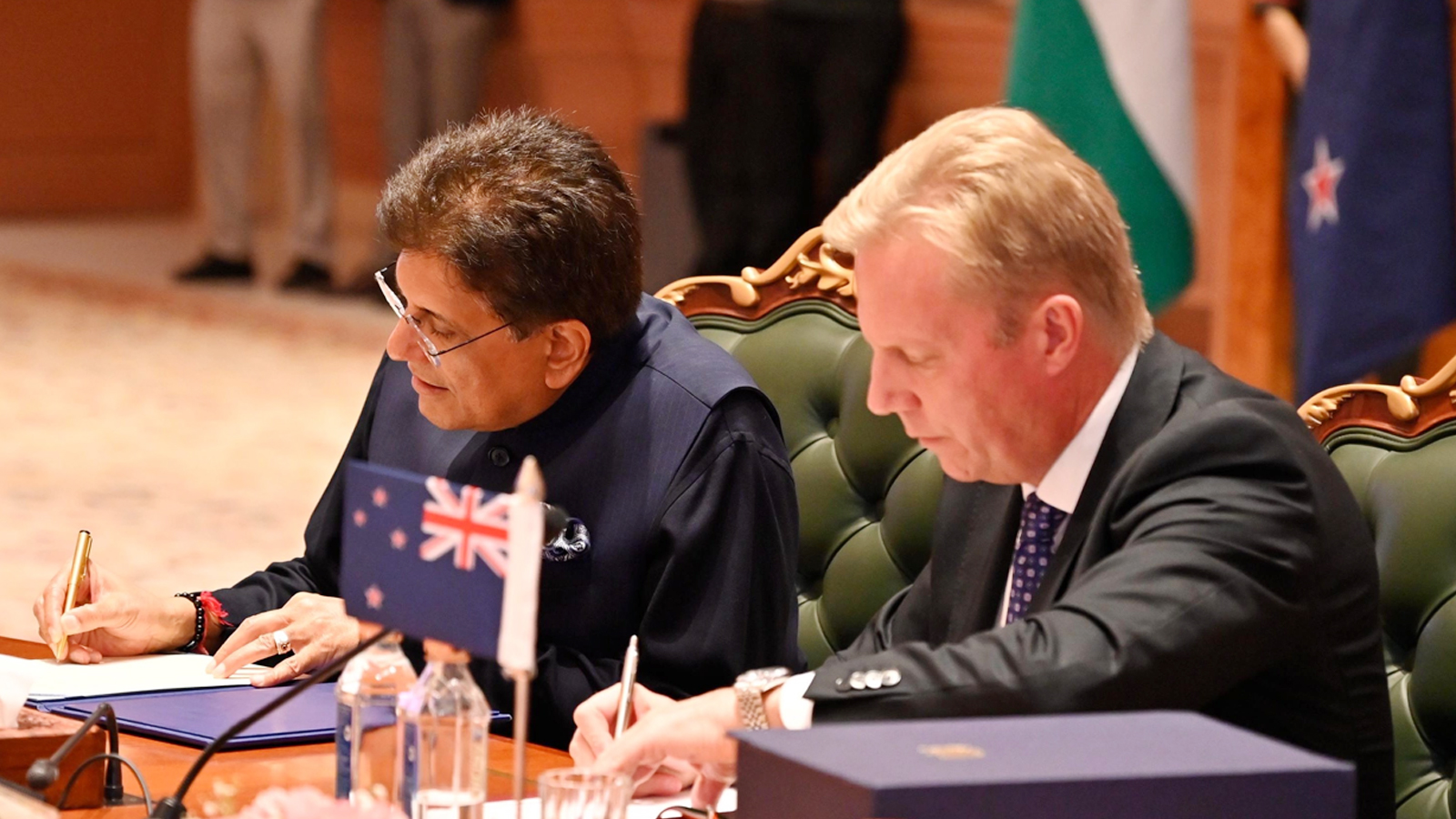
The agreement was signed on 27 April 2026 in New Delhi. Both countries completed the required domestic processes in September, clearing the way for implementation from 20 October.
For Indian businesses, the next step is to understand how the agreement’s provisions apply to their products, services and target customers.
India–New Zealand FTA: Key Highlights
- Effective date: 20 October 2026.
- Goods market access: Duty-free access for 100% of Indian exports to New Zealand, according to the Indian government’s announcement.
- Trade target: NZ$7 billion, approximately ₹35,000 crore, in bilateral trade in goods and services by 2030.
- Investment: New Zealand has announced a commitment to invest US$20 billion in India over 15 years.
- Export sectors: Textiles, apparel, leather, footwear, engineering goods, gems and jewellery, and processed foods are among the sectors identified by the Indian government as potential beneficiaries.
- Services: The agreement includes provisions relating to IT, engineering, healthcare, education, construction, traditional medicine and other services.
- MSMEs: The agreement provides for trade-related information, export-readiness support and links with New Zealand’s small-business ecosystem.
These are agreement-level provisions and policy commitments. Actual commercial benefits depend on the product or service, applicable rules, business readiness and market demand.
1. What Changes for Indian Exporters?
The agreement is intended to improve the price competitiveness of Indian products in New Zealand by removing customs duties on Indian merchandise exports covered by the agreement.
The Indian government has identified several labour-intensive and manufacturing sectors that could benefit, including:
- Textiles and apparel
- Leather and footwear
- Gems and jewellery
- Engineering goods
- Processed food products
The agreement also provides for cooperation involving manufacturing inputs, trade facilitation and integration into global value chains.
For an exporter, a reduction in customs duties can be commercially relevant, but it does not automatically create demand or guarantee additional orders.
Businesses will still need to evaluate product suitability, pricing, quality, logistics, distribution and competition in New Zealand.
What should exporters check?
Before quoting a New Zealand buyer, businesses should establish:
- The correct product classification and HS code.
- The applicable tariff treatment under the FTA.
- The product-specific rules of origin.
- The documentation required to claim preferential treatment.
- Applicable product standards, labelling and import requirements.
- Freight costs, delivery timelines and the final landed cost.
Important: Businesses should confirm the tariff applicable to their specific product rather than assume that every shipment automatically qualifies for preferential treatment. The relevant customs and origin requirements must be satisfied.
2. Which Indian Products Could Be Worth Exploring?
The Indian government has highlighted several sectors for which the agreement may improve export competitiveness.
Textiles and Apparel
Indian textile and apparel businesses can examine whether their products are competitively positioned for New Zealand’s retail, distribution and business-to-business markets.
Potential areas for market research include home textiles, garments, made-ups and other textile products, depending on the individual product’s specifications and commercial positioning.
Leather and Footwear
Manufacturers and exporters can evaluate product pricing, design, quality requirements and distribution channels in New Zealand.
The commercial case will depend on the product segment, buyer requirements and the exporter’s ability to meet the applicable standards.
Engineering Goods
Engineering manufacturers can assess the market for relevant components, equipment and industrial products.
Product classification, technical specifications, servicing requirements and competition should form part of the market assessment.
Gems and Jewellery
Businesses can investigate suitable product segments, distribution channels and buyer requirements while assessing pricing, design, compliance and logistics.
Processed Food Products
Food processors can explore relevant product segments, but should first verify New Zealand’s food-import requirements, product eligibility, labelling rules and any applicable sanitary or phytosanitary conditions.
These sectors are areas worth evaluating, not confirmed guarantees of demand. Exporters should validate their product-market fit before committing to substantial production or marketing expenditure.
3. The Agreement Also Covers Services
The India–New Zealand FTA extends beyond merchandise trade.
According to the Indian government’s announcement, the agreement includes provisions relating to services, including IT, engineering, healthcare, education, construction and traditional medicine. It also addresses professional mobility and cooperation in other areas.
These provisions may be relevant to Indian service businesses examining the New Zealand market.
However, a services commitment under an FTA should not be interpreted as unrestricted permission to practise a regulated profession, obtain a visa or operate a business in New Zealand.
Businesses and professionals should verify the relevant licensing, immigration, qualification-recognition and sector-specific requirements before proceeding.
4. What Is the Bilateral Trade Target?
India and New Zealand have set an aspirational target of doubling bilateral trade in goods and services to NZ$7 billion, approximately ₹35,000 crore, by 2030.
The target forms part of the broader India–New Zealand strategic partnership and roadmap for cooperation.
The agreement also includes a US$20 billion investment commitment from New Zealand over 15 years, as announced by the Indian government.
These targets and commitments indicate the intended direction of bilateral economic cooperation. They should not be interpreted as guaranteed trade growth for any individual company or product.
For businesses, the practical question is how to identify a relevant market segment and build a commercially viable offer.
5. What Should Indian MSMEs Do Next?
The agreement’s entry into force provides a reason for businesses to review their New Zealand market strategy.
A practical starting point is to follow these steps.
Step 1: Select a Product
Identify a product that the business can supply consistently in terms of quality, quantity, pricing and delivery.
Step 2: Research the New Zealand Market
Examine competing products, distribution channels, buyer requirements, market prices and relevant import data.
Step 3: Verify FTA Eligibility
Confirm the HS code, tariff treatment, rules of origin and documentation required for the product.
Step 4: Calculate the Landed Cost
Include production, packaging, inland transport, freight, insurance, handling and other relevant costs.
Step 5: Prepare the Product for Market Entry
Review product presentation, packaging, labelling, technical documentation and any applicable regulatory requirements.
Step 6: Identify Relevant Business Channels
Depending on the product, potential channels may include importers, distributors, retailers, specialist wholesalers or direct business customers.
Step 7: Validate Before Scaling
Test commercial assumptions, evaluate feedback and establish the practical requirements for supplying the market before making major commitments.
The FTA can improve market-access conditions, but a sustainable export business still requires product readiness, competitive economics and a clear route to customers.
6. Market Access Is the Starting Point, Not the Finish Line
A trade agreement can reduce a tariff barrier, but businesses still need to understand the market they want to enter.
For Indian exporters considering New Zealand, the commercial process involves connecting several elements:
PRODUCT → MARKET RESEARCH → FTA ELIGIBILITY → PRICING → PRODUCT PRESENTATION → BUYER DISCOVERY → COMMERCIAL VALIDATION
Each step addresses a different business requirement.
An exporter may need market intelligence to assess demand, product design and packaging support to prepare an offer, a digital catalogue or website to present the product, or a market-focused marketing plan to communicate with relevant trade audiences.
The appropriate approach depends on the business, product and target market.
What This Means for Indian Businesses
The India–New Zealand FTA entering into force on 20 October 2026 marks a significant step in bilateral trade cooperation.
For Indian exporters, the agreement provides a basis to reassess the competitiveness of eligible products and investigate the New Zealand market. For service providers and professionals, its services and mobility provisions merit closer examination alongside the relevant regulatory requirements.
The next phase will depend on implementation, business preparedness and the ability of companies to convert improved market-access conditions into commercially viable activity.
For exporters, the immediate priority is clear: understand the agreement, verify product eligibility and build a market-entry plan based on evidence rather than assumptions