


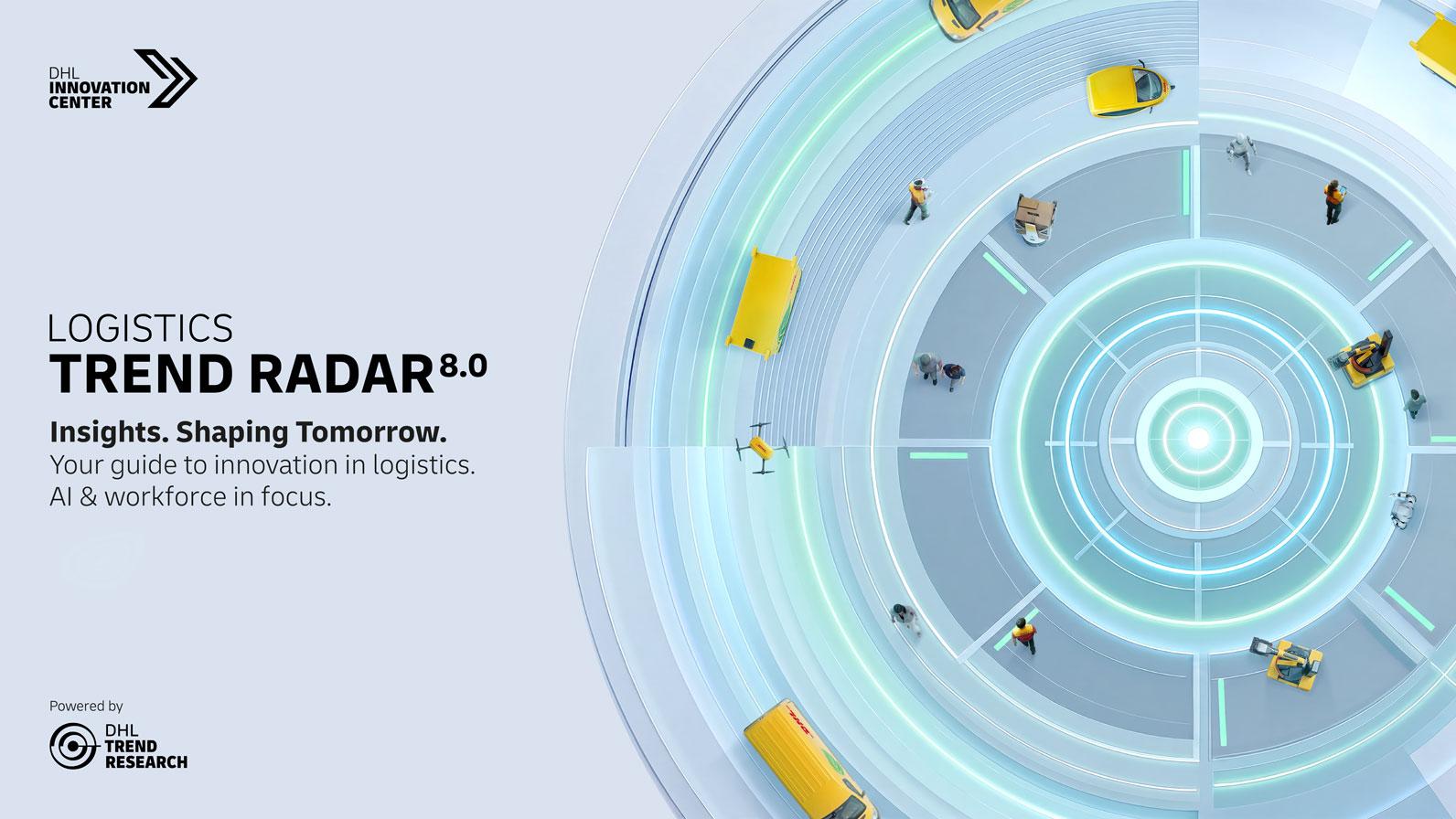
New developments in artificial intelligence, robotics and automation are reshaping logistics operations, with growing attention on how technology can help coordinate global supply chains.
Artificial intelligence is beginning to take on a more active role in logistics, moving beyond information retrieval and routine assistance towards systems that can help plan, coordinate and execute operational tasks.
The shift is highlighted in the eighth edition of DHL’s Logistics Trend Radar, announced on 24 September 2026. The report examines technological, business and societal trends expected to influence the logistics industry over the coming decade.
Among the developments receiving attention are agentic AI, AI-enabled commerce, robotics and automation. Together, these technologies point towards a logistics environment in which digital systems increasingly work alongside people to support operational decisions and processes.
From Digital Assistance to Coordinated Operations
Traditional digital tools help businesses retrieve information, track shipments and manage routine communications. Newer AI systems are being developed to take on more complex sequences of work.
Known as agentic AI, these systems can be designed to plan tasks, coordinate actions and execute defined workflows under appropriate human oversight.
In logistics, potential applications include coordinating shipment information, managing operational communications, identifying disruptions and helping teams respond to changing supply-chain conditions.
The significance for international trade lies in the complexity of moving goods across borders. Shipments involve multiple participants, including exporters, importers, freight forwarders, carriers, warehouses and customs intermediaries. Better coordination between these participants can help businesses manage information and operational processes more effectively.
However, the benefits depend on the quality of the underlying data, integration with existing systems and the suitability of each task for automation.
Why Technology Matters to Global Supply Chains
International supply chains depend on timely information and coordination across different businesses, transport networks and jurisdictions.
AI and analytics can help organisations interpret large volumes of operational data, identify patterns and support decisions involving inventory, transport planning and shipment management.
Robotics and automation also continue to influence warehouse operations, material handling and other logistics activities.
For businesses involved in international trade, these developments matter because logistics performance affects delivery schedules, inventory planning, customer service and the ability to respond to disruption.
The technology does not remove the complexity of cross-border trade. Instead, it offers tools that may help logistics operators and their customers manage that complexity.
People Remain Central to Logistics
Automation does not mean that every logistics activity can or should be transferred to a machine.
DHL’s report emphasises that the workforce remains central as AI, robotics and automation reshape logistics operations. Technology adoption also raises questions about workforce skills, safety, employee experience and how responsibilities are distributed between people and digital systems.
For logistics businesses, successful implementation therefore involves more than adopting new software or equipment. It requires suitable processes, employee training, reliable data and clear responsibility for decisions.
Human oversight remains particularly important when systems encounter unexpected circumstances, incomplete information or decisions with significant commercial consequences.
What This Could Mean for Exporters and Importers
The development of logistics technology is relevant beyond the companies operating warehouses, transport networks and distribution centres.
Exporters and importers may increasingly encounter technology-enabled services through their logistics partners. Depending on the systems adopted, these services may provide improved shipment visibility, more coordinated communication, better operational planning and faster identification of exceptions.
Businesses evaluating logistics providers should understand which capabilities are actually available, how shipment information is shared and how disruptions are handled.
They should also distinguish between established operational services and emerging capabilities still being tested or introduced.
Technology alone does not guarantee faster deliveries, lower costs or the elimination of supply-chain disruption. Results depend on the particular operation, the systems involved and how effectively they are implemented.
A Broader Transformation in International Trade
The logistics sector’s interest in agentic AI reflects a wider development in digital commerce: businesses are exploring how software can move from presenting information to helping execute defined tasks.
For international trade, this raises practical questions about system integration, data quality, cybersecurity, accountability and coordination across organisations.
The next phase of logistics technology will depend not only on more capable AI systems but also on the ability of businesses to integrate them into reliable operating processes.
As global supply chains continue to evolve, the relationship between technology and human expertise will remain central to how goods move between markets.
For the international trade community, the key development is not simply that logistics is becoming more digital. It is that technology is increasingly being designed to help coordinate the work behind global commerce.
About The Exim Times
The Exim Times is an independent trade media platform covering international trade, global markets, trade events, technology and business developments shaping the export-import industry.